Contractors: Prevent Estimate vs. Quote Disputes in 5 Minutes
Contractors: Prevent Estimate vs. Quote Disputes in 5 Minutes
Short answer: an estimate is an approximate price that can change, while a quote is a fixed offer tied to a defined scope of work. If you need a binding price, inspect the job first and issue a written quote with a clear acceptance method. If scope is still uncertain, call it an estimate and write down your assumptions.
TL;DR:
- Before offering a fixed price, inspect and measure the site, confirm materials and specifications, then state scope, exclusions, timeline, payment terms, validity, and acceptance method.
- A document’s label alone does not determine whether an agreement binds; clear terms, written acceptance, deposits, and subsequent conduct can make even an estimate enforceable.
- When hidden conditions remain, use ranges, allowances, and assumptions; pause when surprises arise and obtain a signed change order covering price and schedule before proceeding.
- Capture conversations, photos, and approvals as they happen, because records of scope and assumptions can resolve disputes, while prompt written notice can protect extra payment claims.
HechitoKeep Job Details on RecordCapture job conversations and details with voice and images, then turn them into organized records without extra typing.Explore Hechito
Table of Contents
- What an estimate is and what a quote is
- When to use an estimate vs. when to issue a quote
- How a quote or estimate becomes part of an enforceable contract
- What to include in written estimates and quotes
- Handling changes and differing site conditions
- Practical examples and short templates
- How real-time capture reduces estimate and quote disputes
- Three habits that keep paperwork out of court
- Putting these habits into daily practice with Hechito
- FAQ
- Sources
What an estimate is and what a quote is
An estimate is a preliminary number you give before all the details are locked down. You might offer one after a phone call, a quick walkthrough, or a look at a few photos, before you know exactly what materials, labor hours, or site conditions you’re dealing with. A quote, by contrast, is a firm offer to perform a specific, defined scope of work for a stated price. You issue it after you’ve measured, inspected, and settled on specifications.
The words you choose matter because they set expectations. A homeowner who hears “estimate” should understand the number can shift. A homeowner who hears “quote” should expect that price to hold, assuming the scope doesn’t change.
A few everyday examples make the distinction concrete:
- A roofer gives a phone estimate of “$8,000 to $12,000” before climbing on the roof, flagging that the range depends on what the inspection finds.
- A kitchen remodeler issues a quote of “$24,500 for cabinets, countertops, and installation as specified in Exhibit A” after a site visit and finalized material selections.
- A painter writes an estimate that includes an allowance: “$400 allowance for trim repair; actual cost may vary based on condition found.”
- An electrician issues a quote with a 30-day validity period and a signature line for the homeowner to accept before work begins.
Marking uncertainty clearly is what separates a responsible estimate from a vague guess. Use ranges instead of single numbers, call out allowances for items you haven’t priced yet, and add contingency language for conditions you can’t verify until you open a wall or dig a trench. A quote, meanwhile, should record the agreed scope, a validity period (so the price doesn’t sit open indefinitely), and a specific way for the customer to accept it, whether that’s a signature, a deposit, or a written “yes” by email.
When to use an estimate vs. when to issue a quote
The timing of your pricing document should match how much you actually know about the job. Giving a fixed-sounding number before you’ve seen the site sets you up for disputes later.
Use an estimate when:
- You’re pricing a job sight unseen, based only on a phone call or photos.
- The customer is comparing contractors early and just wants a ballpark.
- Site conditions (wiring, plumbing, structural issues) are unknown until you open something up.
Use a quote when:
- You’ve completed a site visit, taken measurements, and confirmed specifications.
- The customer has selected materials, finishes, or fixtures.
- You’re ready to commit to a price that will hold unless scope changes.
A repeatable field workflow keeps this simple. Start with the first call, where you gather enough information to decide whether you can even give a rough estimate or need to schedule a visit. Next comes the site visit, where you measure, inspect, and ask about preferences. From there you draft either a refined estimate (if unknowns remain) or a formal quote (if everything is settled). The customer reviews it, you answer questions, and once they accept it in writing, you move into the contract and scheduling phase.
Pro Tip: Never let a verbal “sounds good” substitute for written acceptance. It’s the gap most contractors fall into, and it’s the hardest one to prove later.
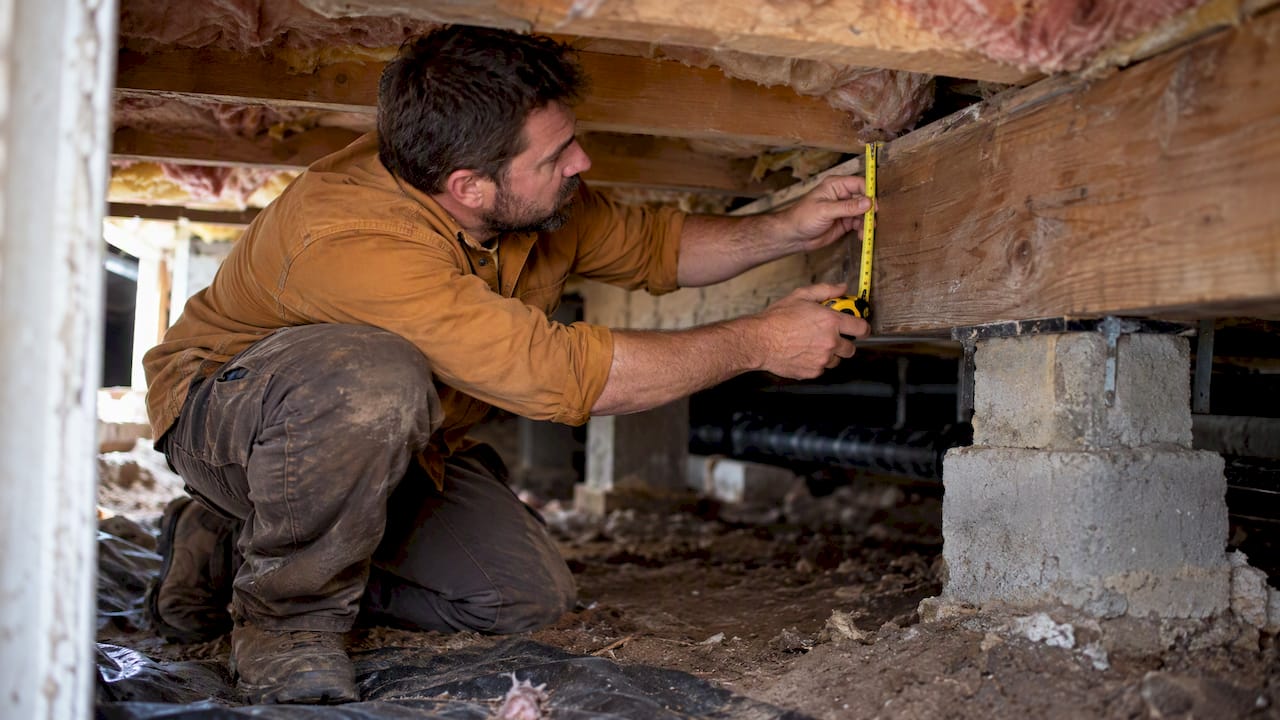
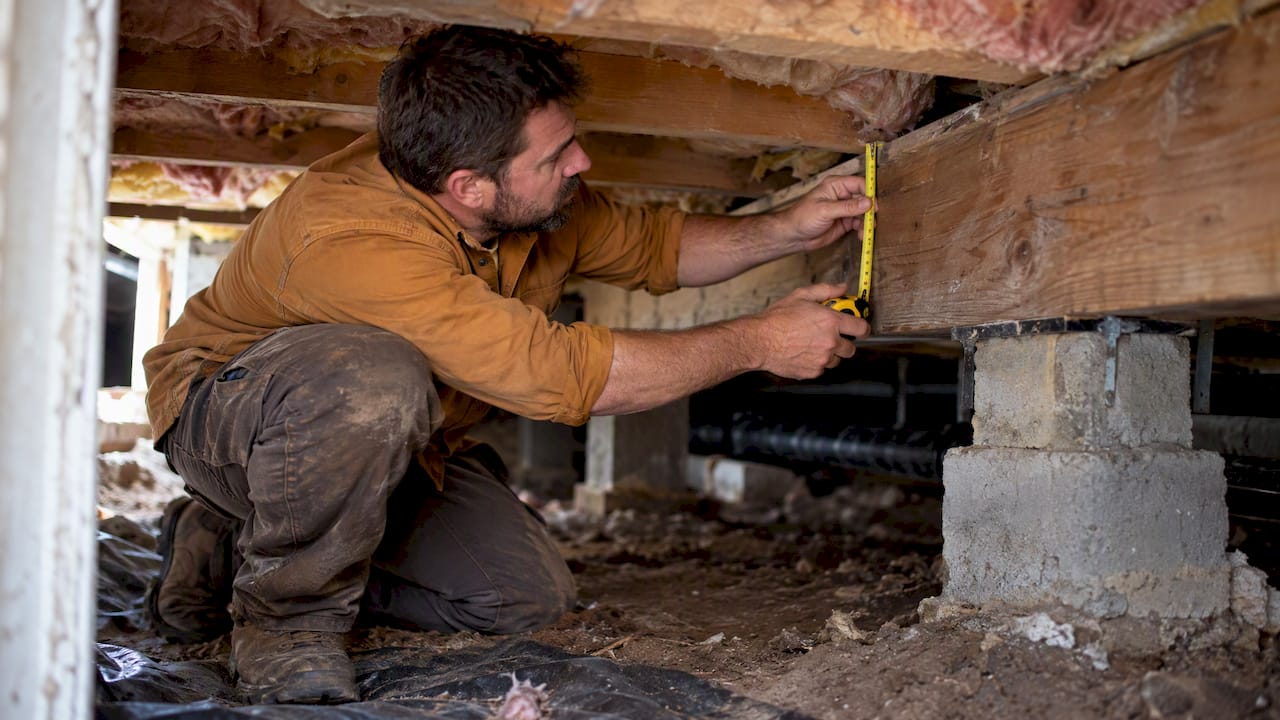
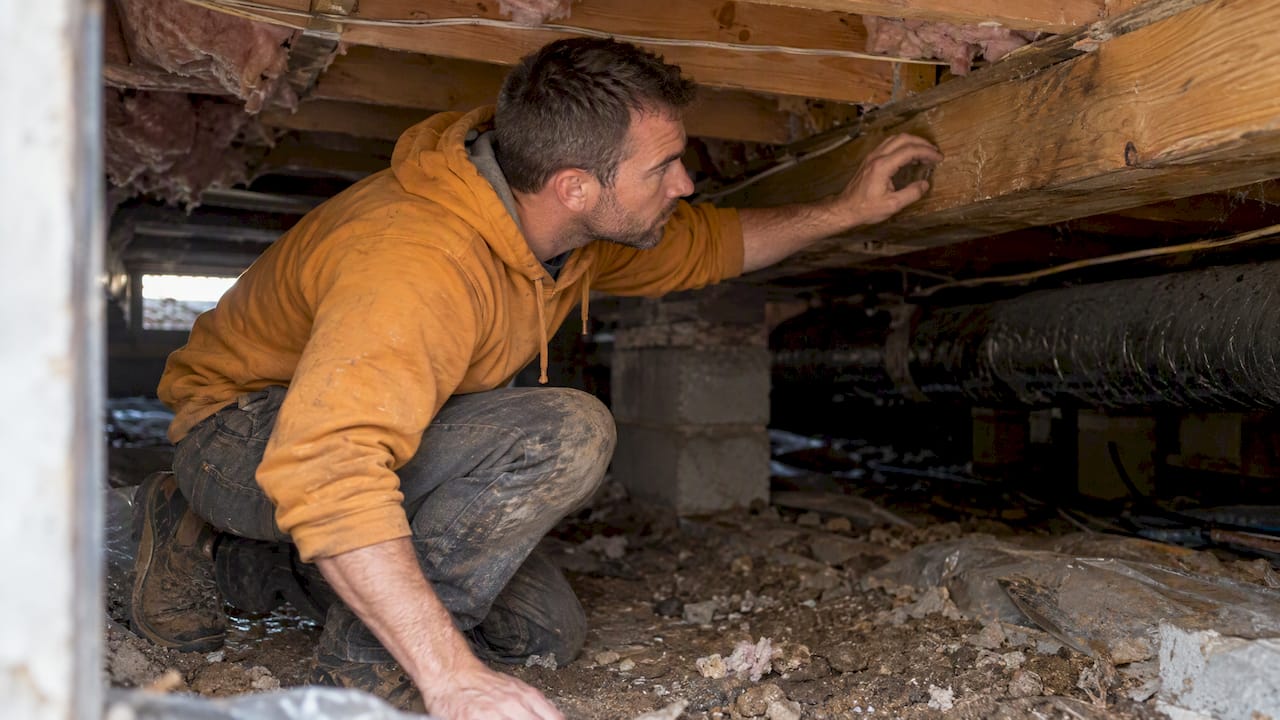
Skipping steps in this workflow is where most pricing disputes start. A contractor who quotes a fixed price over the phone, without ever seeing the crawlspace, has effectively promised something they can’t control. If the crawlspace turns out to need extra framing, that unpriced work becomes a fight instead of a straightforward change order.
How a quote or estimate becomes part of an enforceable contract
Whether a document is legally binding doesn’t come down to whether you typed “estimate” or “quote” at the top. Courts look at the substance of what was offered and how the other party responded. Contract law principles summarized in the Uniform Commercial Code and related contract doctrine focus on three things: whether the terms were definite enough to enforce, whether there was a clear acceptance, and how the parties actually behaved afterward.
That means a document labeled “quote” can still fail to create a binding obligation if it’s missing essential terms, like price, scope, or timeline. Conversely, an “estimate” that a customer accepts in writing, paired with a deposit and the start of work, can end up functioning as a contract even though the label suggested flexibility. This is why the wording inside the document, not the header, is what protects you.
- Definiteness: does the document state price, scope, and timeline clearly enough that a court could enforce it?
- Acceptance: did the customer sign, pay a deposit, or otherwise clearly agree?
- Conduct: did both parties act as though a deal existed, even without perfect paperwork?
For home-improvement work specifically, the Federal Trade Commission’s guidance on avoiding home improvement scams recommends that written contracts include the contractor’s identity, license number where required, start and completion dates, payment terms, permit responsibilities, and cancellation rights. These aren’t just consumer protections. They’re the same elements that make your own pricing documents hold up if a customer later disputes what was promised.
Written estimates reduce disputes: the FTC’s consumer guidance recommends getting multiple written estimates and spelling out materials, completion dates, and assumptions, specifically because vague paperwork is a common source of home-improvement complaints.
What to include in written estimates and quotes
A strong written document does most of the work of preventing disputes before a disagreement ever starts. Whether you’re issuing an estimate or a quote, certain fields belong in both, and a few distinctions matter depending on which one you’re writing.
At minimum, include:
- Scope of work, described specifically enough that both sides know what’s included.
- Exclusions, stating what is explicitly not covered (permit fees, disposal costs, unforeseen repairs).
- Materials, including brand, grade, or specification where it affects price.
- Timeline, with a start date and estimated or firm completion date.
- Payment schedule, breaking out deposit, progress payments, and final payment.
- License and insurance information, especially where local rules require it, consistent with the FTC’s recommended contract elements.
- Validity period for quotes, so a customer can’t accept a six-month-old price after material costs have shifted.
- Acceptance method, whether that’s a signature line, a deposit, or a written confirmation.
For estimates, the goal is to make uncertainty visible rather than hidden. An allowance line should say something like “flooring allowance: $3 per square foot, subject to final selection,” so the customer understands that number isn’t locked. A contingency line should flag conditions you can’t verify yet, such as “price assumes no asbestos abatement is required; if found, a change order will follow.”
For quotes, the goal is to make the firm price unmistakably firm. State the scope in enough detail that there’s no ambiguity about what’s included, attach drawings or specification sheets where relevant, and make the validity period and acceptance method impossible to miss.
Pro Tip: Put your validity period in bold, right next to the total price. It’s the single line most likely to get skimmed over, and the one most likely to cause an argument three months later.
Handling changes and differing site conditions
Even a carefully scoped quote runs into surprises once the work starts. What separates contractors who get paid for extra work from those who eat the cost is whether they stop and document the change before proceeding.
- Pause when you hit something unexpected. Don’t keep working on the assumption you’ll “sort out payment later.”
- Write a change order that states the changed work, the adjustment to the contract price, and the adjustment to the schedule, following the same structure described in the American Bar Association’s overview of change-order basics.
- Get it signed before continuing, whenever the job allows for it. Standard industry language, including AIA-style change-order provisions referenced in that same ABA guidance, calls for agreement on scope, price, and time before the changed work proceeds.
- Use your differing-site-conditions clause. The ABA’s analysis of differing-site-condition clauses explains that these clauses, paired with clear notice procedures, allocate risk for unexpected conditions like rotted framing or buried utilities, and affect whether you can later recover costs for them.
- Give notice promptly and in writing. The same ABA guidance notes that missing a notice deadline can undercut an otherwise valid claim for extra payment.
- Avoid the trap of repeated verbal approvals. If you consistently accept verbal go-aheads for changes without paperwork, that pattern of conduct can waive your written-change requirement entirely, according to the ABA’s discussion of course-of-performance waiver.
A verbal “yeah, go ahead, just handle it” from a homeowner feels efficient in the moment. It’s also the exact kind of informal exchange that leaves you unpaid when the job wraps and nobody remembers agreeing to anything in writing.
Practical examples and short templates
Seeing the wording side by side makes the difference easier to apply on your next job.
Estimate excerpt (uncertainty marked): “Preliminary estimate for bathroom remodel: $9,500 to $13,000. Includes demo, standard fixtures, and tile allowance of $5 per square foot. Does not include plumbing relocation if required once walls are opened. Final price to be confirmed after site inspection.”
Quote excerpt (fixed and accepted): "Fixed quote for bathroom remodel as specified in attached drawing: $11,200. Includes all labor and materials listed in Exhibit A. Valid for 30 days from the date above.
A quick post-acceptance checklist keeps the paperwork moving once a quote is signed:
- Confirm permit requirements and file applications before demolition begins.
- Collect the deposit before ordering materials.
- Lock in a start date and share it with the customer in writing.
| Document type | Price certainty | Typical timing | Key field to include |
|---|---|---|---|
| Estimate | Approximate, may change | Before site visit | Ranges and assumptions |
| Quote | Fixed for defined scope | After inspection | Validity period and acceptance line |
| Change order | Fixed for added/changed scope | Mid-project | Adjustment to price and schedule |
How real-time capture reduces estimate and quote disputes
Most pricing disputes trace back to a gap between what was said on-site and what ended up on paper. The conversation where a homeowner approved an upgrade, or where you flagged a possible asbestos issue, often never makes it into the written record.
Capturing that conversation as it happens, rather than reconstructing it from memory at the end of the day, closes that gap. A field tool that records voice notes and photos during the walkthrough preserves exactly what was discussed: the scope, the assumptions, and any conditions you flagged as uncertain.
- Voice and photo capture during the site visit creates a timestamped record of what scope and assumptions were discussed.
- Bilingual documentation reduces miscommunication on jobs where conversations happen in both English and Spanish.
- Turning that captured conversation directly into a quote or invoice, instead of retyping notes later, shortens the time between acceptance and payment.
That kind of documentary trail is exactly what matters if a dispute ever ends up in front of a judge weighing definiteness, acceptance, and conduct.
Three habits that keep paperwork out of court
After walking through the legal mechanics and the drafting checklist, the real lesson is simpler than it looks on paper. Most disputes don’t come from bad contracts. They come from contractors who skip the five minutes it takes to write something down.
Document scope and assumptions in writing every time, even for a job you think is simple. Stop work the moment something unexpected turns up, and get a change order signed before you touch it. Capture acceptance however you can, a signature, a timestamped voice note, or an app record, because that’s the evidence that settles an argument before it starts.
None of these habits require a law degree. They require five extra minutes per job, consistently applied.
— Francisco
Putting these habits into daily practice with Hechito
Writing everything down is good advice that’s hard to follow when you’re covered in drywall dust and the customer is asking a question mid-measurement. That’s the gap Hechito is built to close: we capture your voice and photos in real time, right on the job site, and turn that conversation into an organized quote or invoice without you retyping a word afterward.
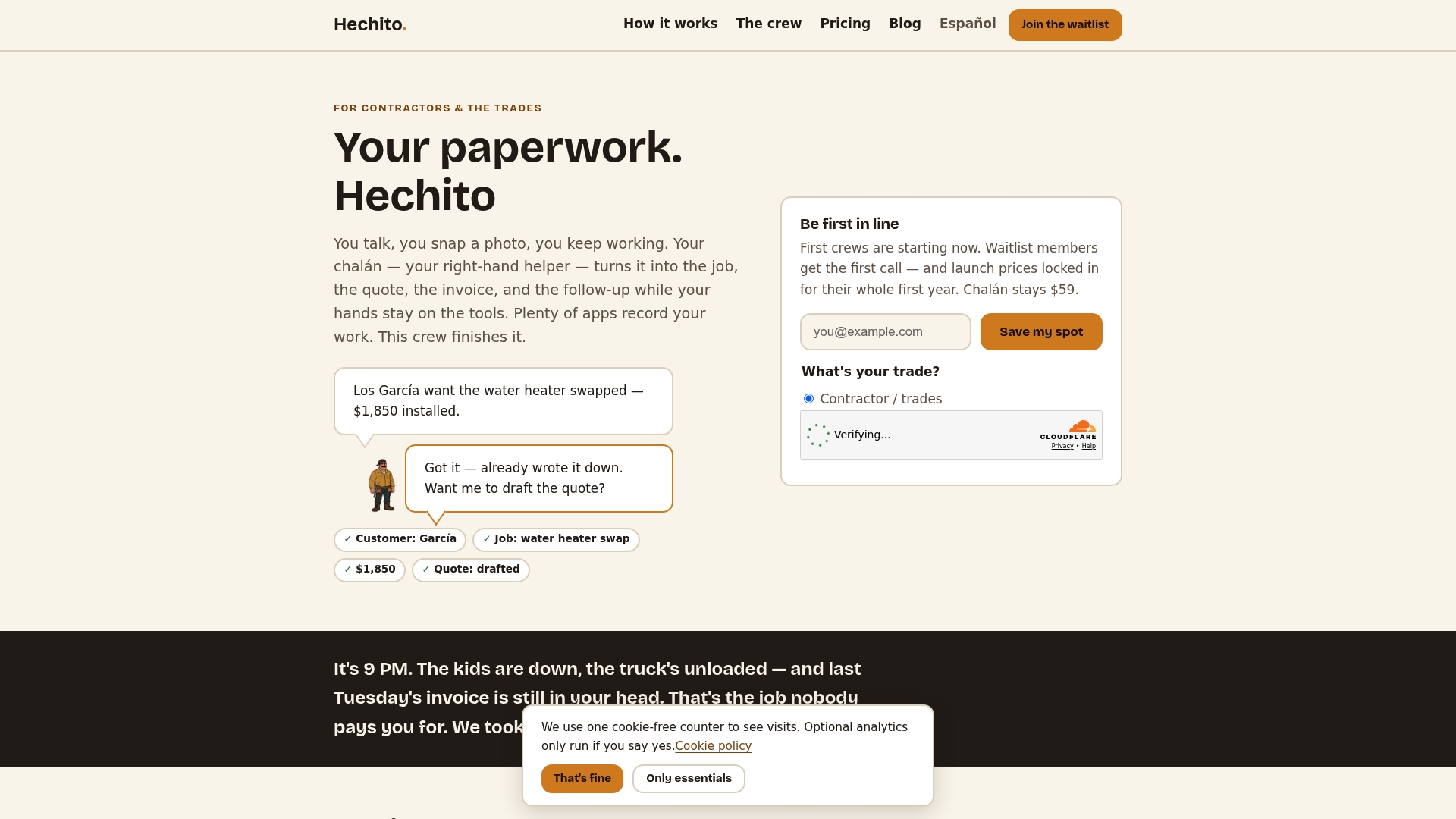
Because some solutions operate bilingually, the same real-time capture can work whether a conversation happens in one language or switches between both, with documents generated cleanly either way. Our crew-based plans, Chalán, Lupita, and Godínez, are built around the specific paperwork tasks contractors deal with daily, from field quoting to bookkeeping. If preserving scope, assumptions, and acceptance evidence sounds like something your current process is missing, take a look at our pricing and plan options.
This article is general information, not a substitute for advice from a qualified lawyer. Consult a qualified legal professional about your own circumstances before acting on anything here.
FAQ
Do contractors give quotes or estimates?
Contractors give both, depending on how much they know about the job. An estimate works for early, preliminary pricing before a site visit, while a quote is appropriate once scope, materials, and measurements are confirmed.
How legally binding is a quote?
A quote becomes binding based on its wording, the customer’s acceptance, and how both parties act afterward, not simply because it’s labeled “quote.” Courts examine definiteness and acceptance when deciding whether a document created an enforceable obligation.
Are estimates legally binding?
An estimate is generally understood as approximate and subject to change, but if a customer accepts it in writing and both parties proceed as though a deal exists, it can still function as a binding agreement. The label matters less than whether the terms were definite and clearly accepted.
How much over an estimate can a contractor go?
There’s no fixed percentage rule; it depends on your contract language, local regulations, and how clearly you documented assumptions and allowances. The safest approach is to flag uncertain costs upfront and issue a written change order the moment the job exceeds what you estimated.
Sources
- Legal Information Institute — Uniform Commercial Code and contract law resources
- Federal Trade Commission — How to avoid a home improvement scam
- American Bar Association — Construction 101: The basics of change orders
- American Bar Association — How can differing-site-conditions clauses impact contracts?
Recommended
This is the paperwork Hechito does for you — while you talk.