Construction Payment Schedules: Verify Draws With Field Photos
Construction Payment Schedules: Verify Draws With Field Photos
A construction payment schedule, often called a draw schedule, breaks a project’s total contract sum into installments tied to completed work. The structure we recommend pairs a detailed schedule of values with milestone-verified draws, clear documentation requirements, and a defined retainage policy. The sections below walk through the templates, math, and contract language that make this work in practice.
TL;DR:
- For lump sum or guaranteed maximum price contracts, itemize the full contract sum in a schedule of values before the first payment application.
- Make each draw depend on an inspection or sign off, and list required lien waivers, inspection reports, and supplier receipts in the contract.
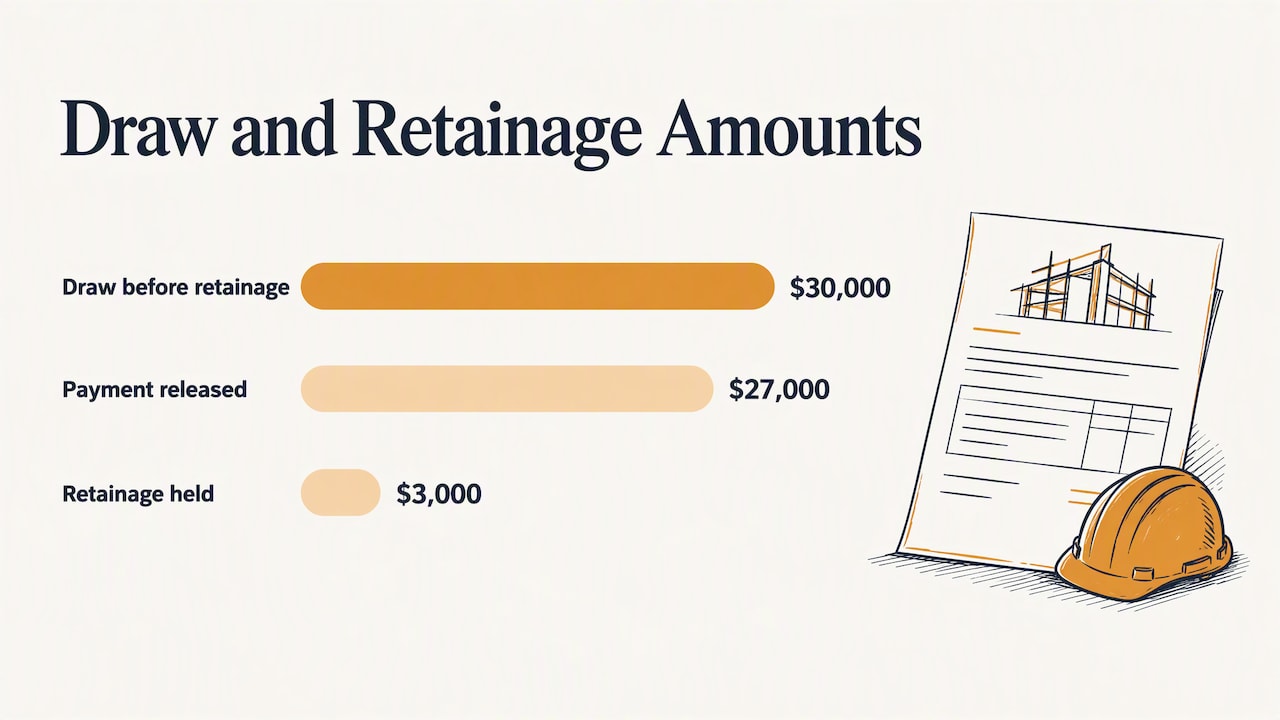
- A $30,000 draw with 10% retainage releases $27,000 and holds back $3,000 until substantial completion; specify when withheld funds become payable.
- Set a 7 to 10 day review window after each application and allow a short cure period, commonly 10 days, before escalating paperwork disputes.
- Small residential jobs can use a deposit and final payment, while steady work suits monthly draws and phased work suits inspected milestones.
Hechitohechito.comKeep Job Details Ready for DrawsHechito captures conversations and job details through voice and images, helping contractors organize documentation from quoting through invoicing.Visit Hechito
Table of Contents
- What a Construction Payment Schedule Actually Covers
- Why a Clear Payment Schedule Matters for Both Sides
- What to Include in a Payment Schedule
- Types of Payment Schedules and When Each Fits
- Schedule of Values: Structure and Standard Forms
- How to Calculate Draw Amounts and Handle Retainage
- Copy-Ready Templates and Example Payment Schedules
- Payment Schedule Best Practices and Common Pitfalls
- Reducing Payment Friction With Better Jobsite Capture
- Author Perspective: Owner Protections Versus Contractor Cash Flow
- How Hechito Helps You Stay on Top of Payment Schedules
- FAQ
- Sources
What a Construction Payment Schedule Actually Covers
A payment schedule lives inside the construction contract, usually as an exhibit or attachment referenced by the payment terms clause. The general contractor or prime contractor typically prepares it and submits it to the owner, architect, or construction manager for approval before work starts.
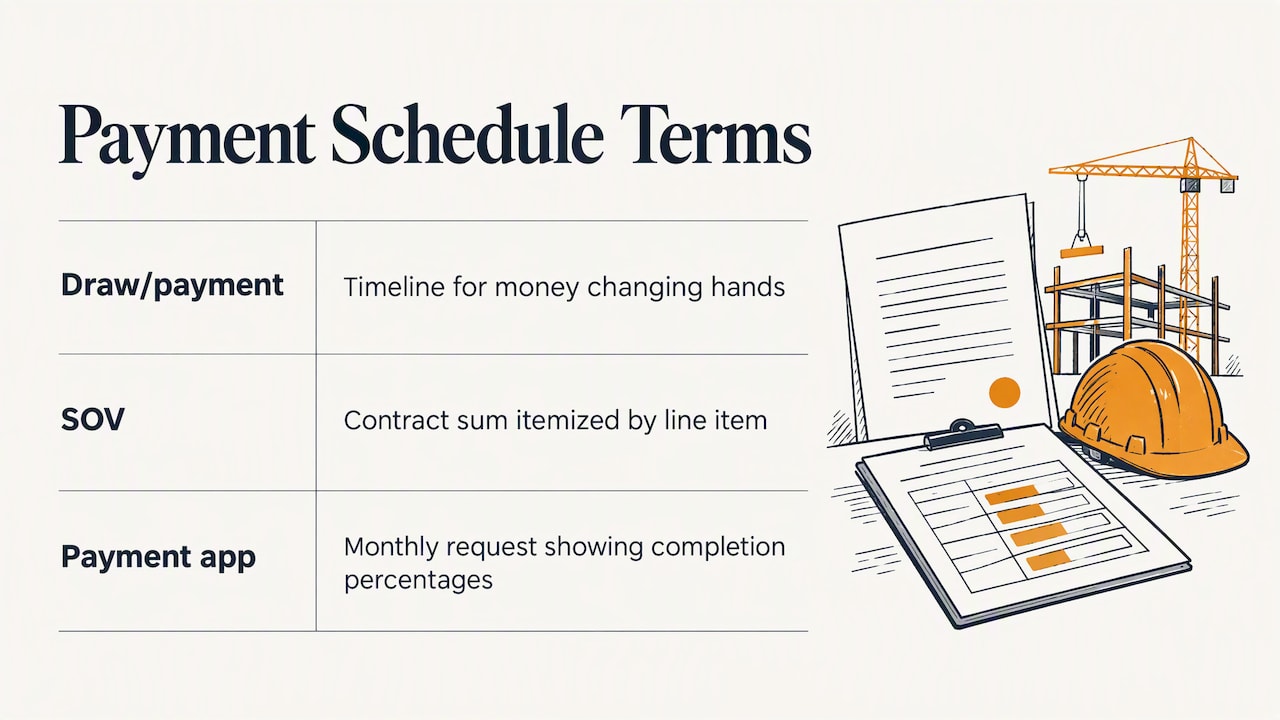
The terminology gets used loosely, so a quick crosswalk helps. A draw schedule and a payment schedule are generally the same thing: a timeline of when money changes hands. A schedule of values (SOV) is the supporting document that itemizes the contract sum into line items, each with a dollar value. An application for payment is the monthly request a contractor submits, referencing the SOV to show what percentage of each line item is complete.
Owners and architects typically require a formal SOV on any lump-sum or guaranteed maximum price (GMP) contract. According to CSI Resources, schedules of values are required for most lump-sum and GMP projects and serve as the basis for reviewing contractor applications for payment, with designers or construction managers often reviewing and accepting the SOV before the first progress payment goes out. Smaller residential jobs sometimes skip the formal SOV in favor of a simpler milestone list, but the underlying logic is the same: nobody pays for work that cannot be measured or verified.
Why a Clear Payment Schedule Matters for Both Sides
Cash flow drives contractor decision-making more than almost any other factor. Labor, materials, and subcontractors all need to be paid before the next draw arrives, so a vague or slow payment schedule can stall a job even when the work itself is on track.
Owners get something different but equally valuable: a structured way to confirm work before money leaves their account. Retainage, typically a percentage withheld from each draw until substantial completion, functions as security against defects or unfinished punch-list items. It protects the owner without requiring the contractor to front the entire job on credit.
A well-documented payment process also speeds up certification. When an architect or construction manager can see exactly what was completed, matched against a specific SOV line item, there is less back-and-forth and fewer stalled applications. Disputes tend to cluster around schedules with vague triggers, not ones with clear documentation requirements.
What to Include in a Payment Schedule
A usable payment schedule needs specific numeric fields and specific language, not general intentions. Drafting or reviewing one means checking for:
- The total contract sum, broken into per-draw amounts or percentages that add up to 100%.
- A stated retainage percentage, consistent across draws unless the contract says otherwise.
- Trigger language tied to inspection or sign-off, not simply a calendar date.
- A list of supporting documents required for release: lien waivers, inspection reports, and supplier receipts.
- Defined payment timing and method, including a reasonable review window before funds are released.
Trigger language deserves extra attention. A clause that pays out on “day 30” regardless of progress invites disputes if the work is behind schedule. A clause tied to “passed rough-in inspection, verified by the building department or owner’s representative” protects both sides because payment only follows confirmed progress.
Documentation requirements should name the exact forms expected. According to the American Bar Association, payment clauses should specify exact supporting documentation required for release of funds, including lien waivers and inspection reports, and can include a short cure period, commonly 10 days, before a dispute escalates to mediation. That cure period gives both parties room to resolve a paperwork gap or a disputed line item without immediately going legal. For a practical breakdown of invoice terms that reduce back-and-forth, our contractor payment terms checklist covers common rejection triggers worth avoiding.
Types of Payment Schedules and When Each Fits
Different project sizes and risk profiles call for different schedule structures:
- Deposit plus final: common for small jobs, usually a deposit collected before work starts and a final payment at completion, with no intermediate draws needed.
- Time-based progress draws: fixed intervals, such as monthly, paid against measurable work completed in that period; works well for steady, predictable labor like framing or finish carpentry.
- Milestone-based draws: tied to specific completed phases, such as foundation poured, rough-in passed, or drywall hung, giving owners assurance that money follows verified progress rather than the calendar.
- Completion-based final payment: released once a punch list is closed out and final inspections pass, often paired with closeout documents like warranties and as-built drawings.
- Retainage-adjusted schedules: any of the above structures can incorporate a withheld percentage per draw, released at substantial completion or after a defect liability period.
Milestone-based schedules with inspection triggers tend to generate the fewest disputes because both sides can point to an objective event, not a subjective judgment call, as proof the payment is due.
Schedule of Values: Structure and Standard Forms
The schedule of values itemizes the entire contract sum into billable line items, each representing a distinct portion of work: site prep, foundation, framing, electrical rough-in, and so on. Every subsequent application for payment references these line items to show percent complete and amount due.
A usable SOV typically includes:
- Line item number and description matching the contract’s scope breakdown.
- Scheduled value (the dollar amount assigned to that line item).
- Percent of work completed to date.
- Amount previously billed and amount currently requested.
- Materials stored on site but not yet installed, when applicable.
The AIA G702 form serves as the summary Application and Certificate for Payment, while the G703 is the detailed continuation sheet that functions as the schedule of values itself, justifying each progress billing line by line. These forms, or an equivalent EJCDC format, are the standard reference point for architects reviewing applications on larger projects.
Submission timing matters. CSI Resources recommends hosting a SOV review meeting before the first application for payment on complex projects, so granularity expectations and allowable mobilization charges get settled upfront rather than disputed mid-project, per CSI Resources. Change orders should update the SOV immediately, not get tracked separately, so the document stays an accurate single source of truth.
Pro Tip: Keep the SOV in a shared, version-dated file so every party references the same numbers during review.
How to Calculate Draw Amounts and Handle Retainage
Three calculation approaches cover most projects. Percent-complete via the SOV multiplies the line item’s scheduled value by the estimated completion percentage. Unit-price measurement works for quantity-based work, like linear feet of trenching, multiplying units completed by the agreed unit price. Milestone allocation simply assigns a fixed amount or percentage to each defined phase, paid in full once that phase is verified complete.
The draw request is $30,000, before retainage. If the contract specifies 10% retainage, the actual payment released is $27,000, with $3,000 held back until substantial completion.
- Conditional lien waivers typically accompany the invoice submission; unconditional waivers follow once payment clears.
- Retainage should be evaluated for its accounting treatment, since classification affects how it appears on financial statements.
- Change orders need to flow directly into both the draw schedule and the SOV before the next application is submitted.
Retainage classification carries real accounting weight. According to CFMA, retainage subject to conditions other than the passage of time is often treated as a contract asset under ASC 606, while retainage that depends only on time passing is typically handled as a straightforward receivable.
Copy-Ready Templates and Example Payment Schedules
A milestone-based template works for most residential and light commercial jobs. A typical structure: deposit at signing, a draw at permit issuance, a draw after rough-in inspection passes, a draw at substantial completion of finishes, and a final payment after closeout. Percentages can be adjusted by project type, but keeping early draws modest protects the owner against front-end loading.
A compact SOV table might look like this:
A paste-ready contract clause for the payment section might read: “Contractor shall submit an application for payment on the first of each month, referencing the current schedule of values. Owner’s representative shall review and either certify or dispute the application within 7 days of receipt.”
- Keep milestone names specific and tied to a verification method, not a vague description.
- Attach the current SOV to every application rather than referencing an old version.
Payment Schedule Best Practices and Common Pitfalls
A handful of habits separate payment schedules that run smoothly from ones that generate disputes:
- Tie every payment trigger to verifiable completion, confirmed by inspection or sign-off, rather than a calendar date alone.
- Spell out the exact documentation format required for each draw, down to the specific lien waiver type.
- Set review and payment windows that are fair to both sides, long enough for genuine review but short enough to avoid cash-flow stress.
- Limit early payouts for mobilization and bonds so the schedule doesn’t front-load risk onto the owner.
- Keep the SOV current and require every change order to update it before the next application goes out.
Front-end loading, where a contractor inflates early line items to get paid faster than work is actually completed, remains one of the more common disputes on lump-sum contracts. A detailed, reviewed SOV catches this before the first payment goes out, according to Autodesk.
Pro Tip: Review the SOV together with the owner’s representative before submitting the first application, not after a dispute starts.
Reducing Payment Friction With Better Jobsite Capture
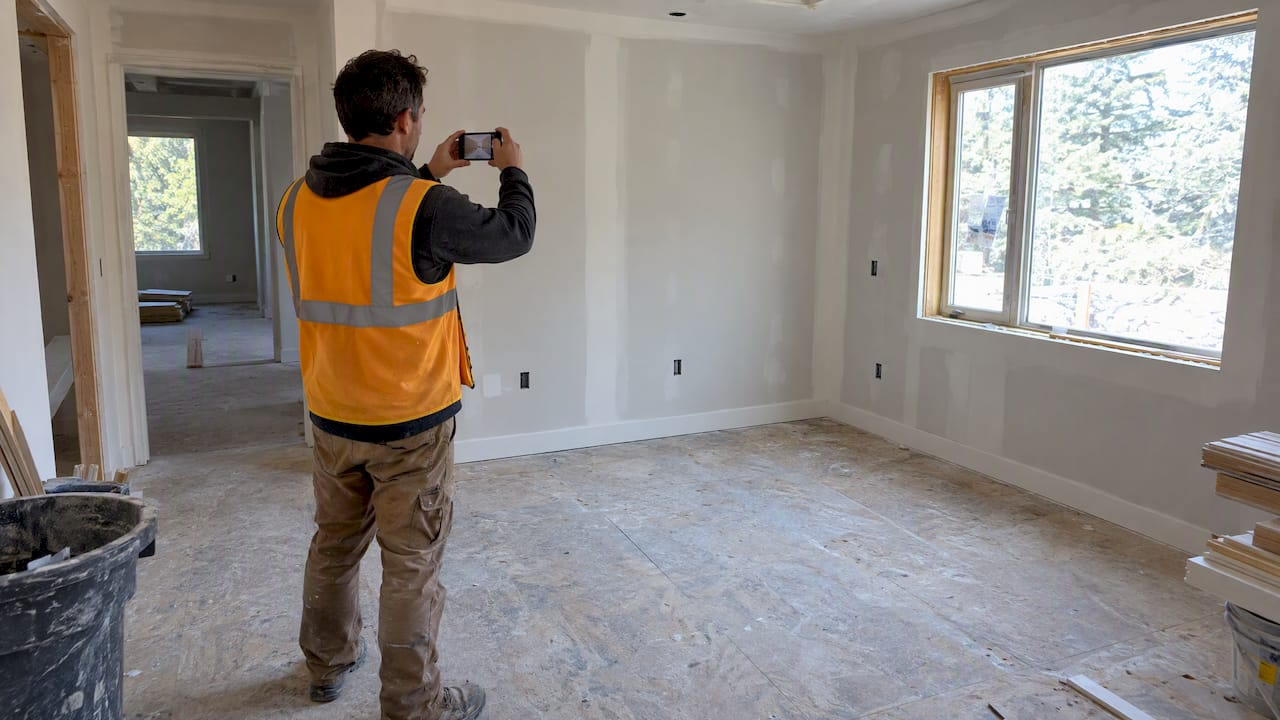
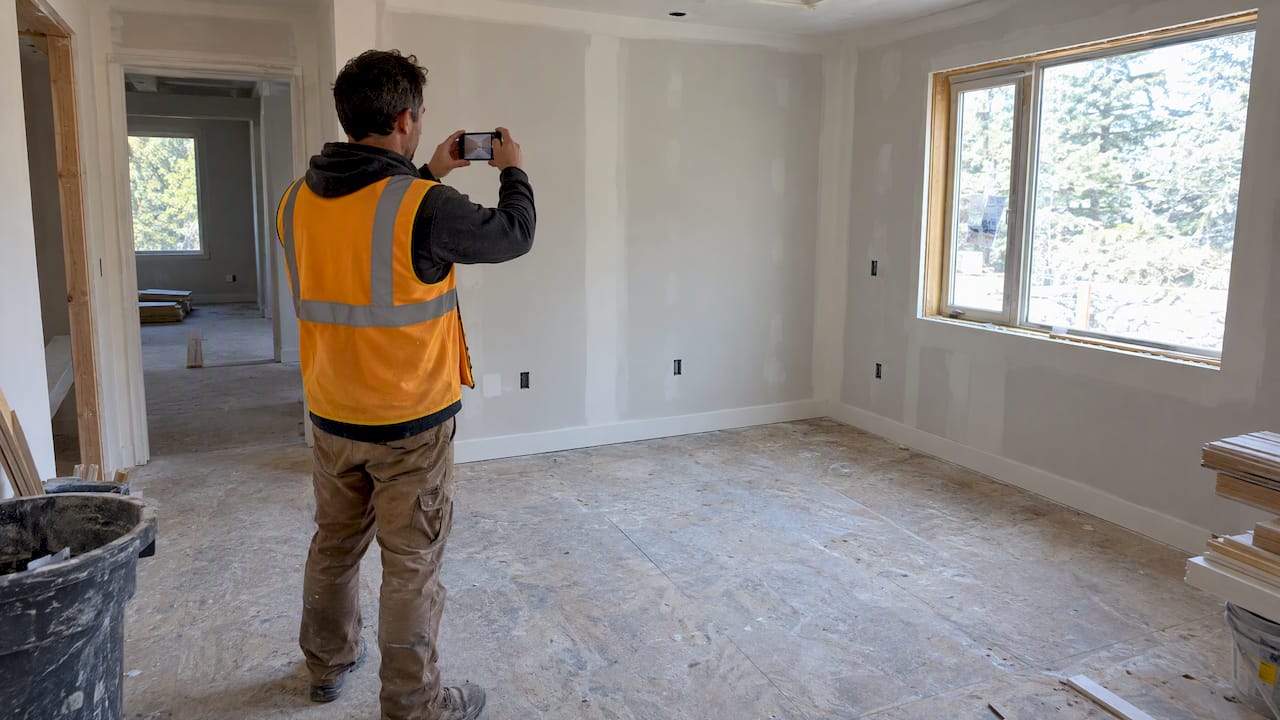
Verification friction usually comes down to documentation gaps: a missing photo, an inspection note that never made it into the file, a conversation about scope that nobody wrote down. Capturing that information the moment it happens, rather than trying to reconstruct it at the end of the day, keeps the SOV and application for payment aligned with what actually happened on site.
Voice and photo capture at the point of work turns a verbal update into an organized record without extra typing, which matters when a payment trigger depends on proof of a completed phase. Bilingual capture reduces a specific kind of friction on crews where conversations happen in both English and Spanish: nothing gets lost in translation between what was said on site and what ends up in the documentation. For structuring records that support bookkeeping and payment applications, our bookkeeping for contractors guide covers how field capture feeds directly into financial records.
Author Perspective: Owner Protections Versus Contractor Cash Flow
Retainage set too high starves contractors of working capital; set too low, it stops functioning as real security. A moderate retainage percentage, tied to a defined release point like substantial completion, tends to balance both interests better than an arbitrary flat number.
Short review windows matter more than most contracts acknowledge. A 7 to 10 day review period, paired with a joint SOV update meeting after any significant change order, keeps the paperwork honest and prevents the kind of drift that turns a routine draw into a dispute.
— Francisco
How Hechito Helps You Stay on Top of Payment Schedules
We provide a platform designed to help contractors reduce time spent on paperwork so they can close out the day more efficiently. Our platform captures jobsite voice notes and photos in real time and turns them into organized records and invoices, so the documentation a payment trigger requires already exists by the time the application is due.
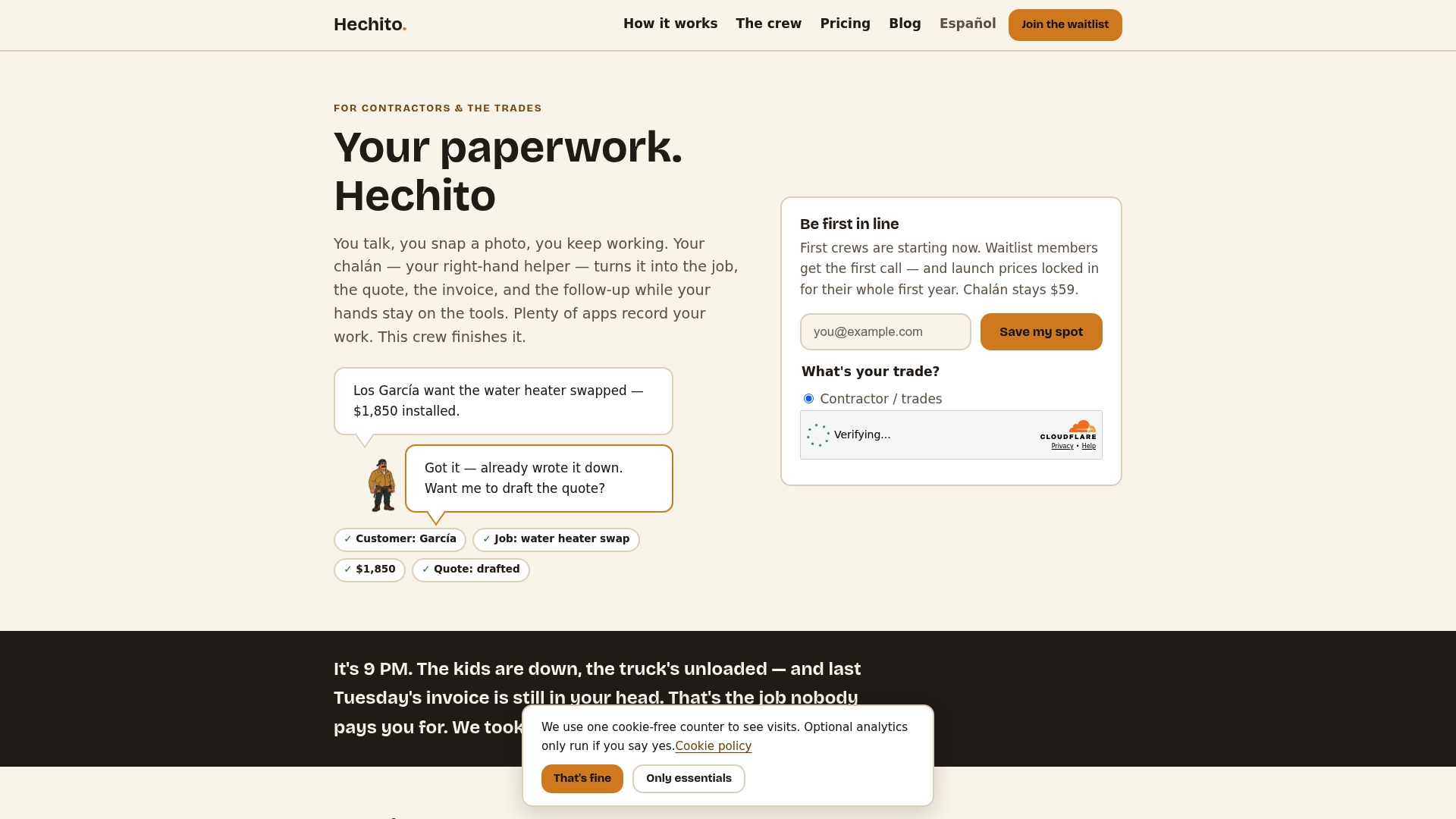
- The platform can generate invoices and estimates from conversations and images captured on site, without requiring extra typing.
- It supports operation in both English and Spanish, helping maintain accuracy regardless of which language the crew uses.
- It assists in organizing receipts and job records automatically, reducing administrative work after hours.
If a payment schedule depends on clean, verifiable documentation, having that documentation ready the moment work happens is the difference between a fast draw and a stalled one. Visit our contractors page to see how the capture-to-invoice workflow fits your crew.
FAQ
What is the typical payment schedule for construction projects?
Most construction projects use either time-based progress draws, paid monthly against measurable work, or milestone-based draws, paid when specific phases like framing or rough-in pass inspection. Larger lump-sum or GMP contracts typically require a formal schedule of values tied to the application for payment process.
What are standard contractor payment terms?
Standard terms generally include a stated retainage percentage, a review window after the contractor submits an application for payment, and a payment deadline following certification. According to the American Bar Association, contracts often include a short cure period, commonly 10 days, before a payment dispute escalates further.
What is a standard construction schedule of values?
A schedule of values itemizes the full contract sum into line items, each with a scheduled value, percent complete, and amount requested. The AIA G703 continuation sheet is the standard form used to detail these line items alongside the G702 summary certificate.
Should I pay a contractor 50% upfront?
A large upfront deposit shifts risk heavily toward the owner, since it pays for work not yet done. A smaller deposit paired with milestone or progress draws, each tied to verified completion, protects both sides better than a single large upfront payment.
Sources
- Progress payments, schedules of values (Part 1) — CSI Resources
- Betting ‘In the Money’ — Customizing your payment clauses — American Bar Association (Construction Lawyer)
- Topic 606: Classification & presentation of retainage and contract assets & liabilities — CFMA
Recommended
This is the paperwork Hechito does for you — while you talk.