Construction Scope of Work: 8 Contractor Checks, From WBS to Photos

Construction Scope of Work: 8 Contractor Checks, From WBS to Photos

A construction scope of work (SOW) is the contract document that defines the work, deliverables, and acceptance standards the contractor must deliver. It works as the single source of truth tied to your drawings and specifications. From the first site instruction, attach those drawings and specs and set up a written change-control record, so every later adjustment has a paper trail.
TL;DR:
- Check the contract’s order of precedence before resolving conflicts, because specifications often control over drawings, while the agreement and general conditions govern the business relationship.
- Define deliverables with measurable acceptance criteria, cite drawing sheets and revision dates, and spell out exclusions, assumptions, milestones, responsibilities, and payment triggers.
- Require an authorized, signed change order stating cost and schedule effects before extra work begins; log changes and confirm verbal directions in writing that day.
- Link each deliverable to a WBS ID and dictionary entry so scope, estimates, scheduling, reporting, and job costing use the same structure.
- Timestamped job site photos and voice notes can document unexpected conditions, but they supplement rather than replace signed change orders.
HechitoKeep Job Details Out of the Paper PileHechito captures customer conversations and job details with voice and images, then turns them into organized records without extra typing.Explore Hechito
Table of Contents
- What does a scope of work cover, and who writes it?
- Which components should every construction SOW include?
- How do you write a scope of work step by step?
- What do scope of work templates and sample clauses look like?
- How do you prevent scope creep with change control?
- How does a WBS connect to your scope of work?
- Can field capture keep your scope of work provable?
- Field-tested habits that save disputes
- Where does Hechito fit into SOW documentation?
- FAQ
- Sources
What does a scope of work cover, and who writes it?
The American Bar Association explains that drawings show design, location, and dimensions, while specifications set materials and workmanship. Together they define what the contractor must build, and the SOW ties those pieces to deliverables and performance standards in plain language.
Ownership usually splits like this:
- Owner’s SOW: the owner or the architect drafts it to describe the finished result and the standards it must meet.
- Contractor’s SOW: the contractor restates the work in buildable terms, often with pricing, sequencing, and exclusions.
- Subcontractor SOW: the general contractor carves out each trade’s piece, so every sub knows exactly where its work starts and stops.
- Architect: interprets the drawings and specs and answers questions on design intent.
The SOW does not stand alone. The agreement and general conditions set the business relationship, while drawings and specifications describe what gets built. ABA commentary on standard contract forms notes that where an order of precedence exists, specifications often control over drawings. Check which document wins in your contract before a conflict forces the question.
If you need to confirm that a subcontractor can actually perform its scope, a directory like PNV Leads’ subcontractor search lets you compare specialties and locations.
Which components should every construction SOW include?
Think of this as an audit list. If any item below is missing from your document, a dispute has somewhere to start.
- Project overview and objective: a clear end state, such as “a finished two-car garage, framed, roofed, and inspected.”
- Deliverables and acceptance criteria: measurable results, like “slab flat within the tolerance stated in the specs.”
- Drawings and specifications: cite them by sheet number, section, and revision date so nobody works from an old set.
- Materials, quality, and workmanship: brands or equivalents, grades, finishes, and who approves substitutions.
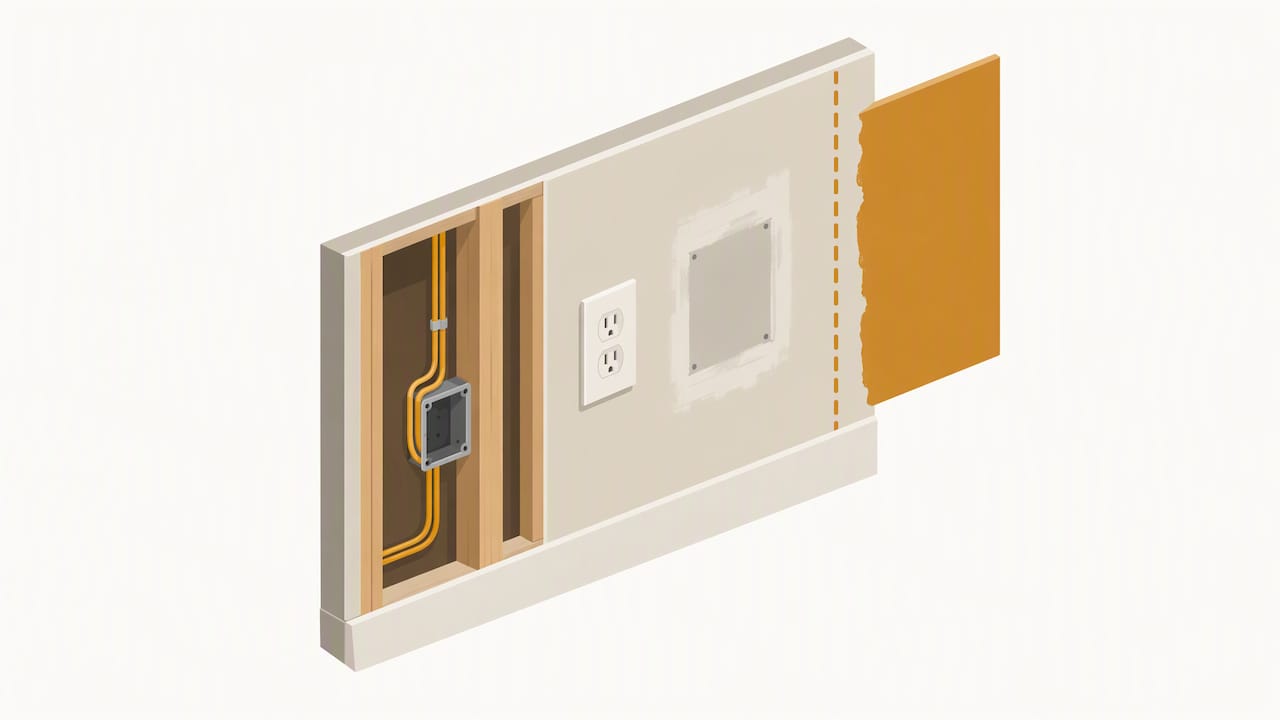
- Exclusions and assumptions: what is not included, such as permits, hazardous material removal, or owner-supplied fixtures.
- Schedule and milestones: start date, phases, inspection points, and turnaround times for approvals.
- Roles and contacts: who decides, who signs, and who answers the phone when a question blocks work.
- Payment terms: how and when payment triggers, retainage, and basic administrative items like insurance and notices.
Allowances deserve special care. Open-ended allowances tend to become sources of disagreement when actual costs exceed expectations, so convert them into fully defined scope items as early as you can.
Exclusions get the least attention and cause the most arguments. A line such as “Painting of drywall patches after electrical rough-in is excluded” takes little effort to write and can save back-and-forth.
Pro Tip: Write each deliverable so a stranger could inspect it with a tape measure and a checklist, without asking you what you meant.
How do you write a scope of work step by step?
Follow this order and you will rarely leave a gap.
- Collect the source documents. Gather the drawings, specs, contract, site photos, and any notes from the owner walkthrough. Clarify the project vision in one or two sentences before you write a word of scope.
- Decompose the work into deliverables. Break the job into pieces such as demolition, framing, rough plumbing, and finishes. Align each piece to a work breakdown structure element so budgets and schedules can follow the same labels.
- Write acceptance criteria and list exclusions. For each deliverable, state how it will be judged complete. Then record assumptions, like “existing subfloor is sound,” so surprises become change orders instead of arguments.
- Set the schedule and assign responsibility. Define milestones, inspection windows, and who owns each task, including owner-supplied items and their delivery dates.
- Lock in payment triggers and change control. Tie payments to milestones, spell out the change-order procedure, name who may approve changes, and collect signatures before work starts.
Read the finished draft aloud from the crew’s point of view. Anything that makes you ask “meaning what?” needs another sentence.
What do scope of work templates and sample clauses look like?
A usable template covers these fields:
- Project name and ID
- Scope summary
- Deliverables
- Acceptance criteria
- Exclusions
- Schedule
- Payment terms
- Signature blocks
Here are short sample clauses you can adapt:
- Deliverable: “Contractor shall install and finish oak flooring per the applicable specification, sanded smooth and sealed with satin polyurethane.”
- Exclusion: “This scope excludes repair of any concealed water damage discovered after demolition.”
- Change order: “No additional work will be performed or paid for without a written change order stating the revised cost and time, signed by Owner and Contractor.”
For a small repair job, a concise template with the essential fields is plenty. For a large, phased project, add a section per phase, a milestone table, and a reference to the master schedule. Keep the language the same style across phases so no one has to relearn it.
How do you prevent scope creep with change control?
Scope creep happens when work expands beyond the contract without written authorization. Bean, Kinney & Korman advise that it drives project failure, delays, and budget overruns, and that standard U.S. practice is a rigorous change-control process where no additional work is paid without a written, signed change order.
Scope creep is a leading cause of project failure, which is why signed change orders and formal change logs are standard practice. The takeaway: treat every “while you’re here” request as a change, not a favor.
A workable change-order flow looks like this:
- Written request describing the added or altered work
- Estimate of cost and time impact
- Approval and signature from the authorized party
- Entry in the change-order log with date, description, price, and signatures
In the field, confirm verbal directions in writing the same day, even by text or email, and attach photos or audio notes as evidence. For billing proof tied to those changes, our guide on verifying draws with field photos walks through the habit.
How does a WBS connect to your scope of work?
The U.S. Department of Energy WBS handbook describes a WBS as a product-oriented hierarchical structure that organizes and subdivides total project scope and links it to schedule and cost baselines. The AACE recommended practice on developing the WBS adds that it should cover all project scope and serve as the common reference for estimating, scheduling, and reporting.
The core completeness rule is that every child element is part of its parent, and together the children make up the whole parent scope. That is how you avoid orphan tasks nobody priced.
- Put WBS IDs next to each deliverable in the SOW, such as “3.2 Rough electrical.”
- Keep a WBS dictionary entry for each element, with activities, reference drawings, and schedule notes.
- Break elements down further where risk is high or an owner wants detailed reporting.
- Use the same IDs in your job costing, as shown in our job costing guide.
Can field capture keep your scope of work provable?
Yes, as a complement to formal language, never a replacement for signed change orders. A timestamped photo of an unexpected condition, plus a voice note describing what the owner asked for, turns “he said, she said” into evidence.
When choosing a tool, check for these:
- Reliable capture on weak job-site signals
- An audit trail showing who recorded what and when
- Exportable records you can hand to an owner or attorney
- Bilingual support for mixed English and Spanish crews
Workflows that work: attach photos directly to the change order, transcribe voice notes into scope updates, and keep one central log for sign-off. Our rules for photo documentation cover framing and naming.
Pro Tip: Photograph the condition before you touch it, then photograph your finished result from the same spot.
Field-tested habits that save disputes
Most scope fights I have seen start small: a verbal “can you also…” with nothing written down. Three habits stop that. Get notes signed daily, take photos before and after every change, and confirm every verbal direction in writing before work begins. Consistent records protect your right to be paid.
— Francisco
Where does Hechito fit into SOW documentation?
If paperwork is what slows your approvals, we built Hechito for exactly this. Talk through a change on site and we turn it into a record, capturing photos and notes in English, Spanish, or both. See what we offer for contractors or compare plans on our pricing page.
FAQ
What is an example of a scope of work?
A simple example reads: “Contractor will demolish the existing deck, install a new pressure-treated deck per the attached drawings, and haul away debris.” It names the work, the standard, and the cleanup. Add exclusions and a price to complete it.
What is the scope of work in building construction?
It is the written description of all work, materials, and standards the contractor must provide. Per the American Bar Association, drawings and specifications together define it.
What is the definition of a scope of works in construction?
It is the contract document that states what work will be done, what will be delivered, and how quality will be judged. It also sets boundaries through exclusions and assumptions.
How do you stop scope creep on a job?
Require a written, signed change order before any added work begins, and log it with date, price, and approver. Confirm verbal requests in writing the same day.
Sources
- Americanbar
- Managing Scope Creep in Construction Projects | Bean, Kinney & Korman
- U.S. Department of Energy Washington, D.C. 20585
- 33R-15: Developing the Project Work Breakdown Structure
Recommended
This is the paperwork Hechito does for you — while you talk.